A guide to textile construction
Waffle or Crepe? How Bath Robe Weaves Shape Comfort
The difference between a robe that feels airy and one that drapes softly begins at the surface. Waffle and crepe-effect linen each bring a distinct texture, weight, and relationship with moisture to the everyday ritual of getting dressed after a bath or shower.
A bath robe is an intimate garment: the first layer you reach for when the water is off and the day has not quite begun. Its appeal rests on more than color or silhouette. The fabric’s construction determines how it sits against the skin, how it handles moisture, how warm it feels, and how readily it dries between uses. Two robes made from the same fiber can feel remarkably different when their surfaces are structured in different ways.
Waffle and crepe are useful examples. Waffle fabric is recognized by its small, raised cells and recessed channels, a three-dimensional texture that gives the cloth a light, airy character. Crepe, by contrast, describes a puckered or grainy surface that can lend fabric a fluid drape and softly irregular hand. Neither name tells the whole story: fiber, yarn, weight, finishing, and garment design all matter. But understanding the surface is an elegant first step toward choosing a robe that suits your routine.
For a warm, absorbent wrap after a shower, a waffle construction may feel particularly practical. For a softer, more fluid garment with a gently textured finish, crepe-effect linen may be the more appealing choice. The right answer is not a universal one; it depends on what comfort means in your home.
What a weave can—and cannot—tell you
In everyday conversation, “weave” is often used to describe any visible fabric texture. In textile terminology, it has a more specific meaning: the way lengthwise warp yarns and crosswise weft yarns interlace. Plain weave, twill, and satin are familiar examples. Waffle construction is associated with a woven structure that creates a grid of raised and recessed areas, while crepe usually refers to a surface effect produced through yarn, weave, finishing, or a combination of these methods.
This distinction matters because a label such as “crepe” does not automatically identify a single construction recipe. Crepe-like texture can be formed in different ways, and the resulting fabric can vary in density, softness, and drape. Likewise, not every waffle fabric has the same cell size or depth. A compact grid may feel different from a more pronounced, open texture, even when the fiber content is identical.
When comparing bath robes, read beyond the name of the finish. Look for the fiber composition, fabric weight, care instructions, and any description of the garment’s intended feel. These details help translate a textile term into a practical expectation. A 100% linen robe, for example, will not necessarily behave like a cotton terry robe: linen’s surface, absorbency, and drying behavior are shaped by its own fiber qualities as well as its construction.
The appeal of waffle: texture with breathing room
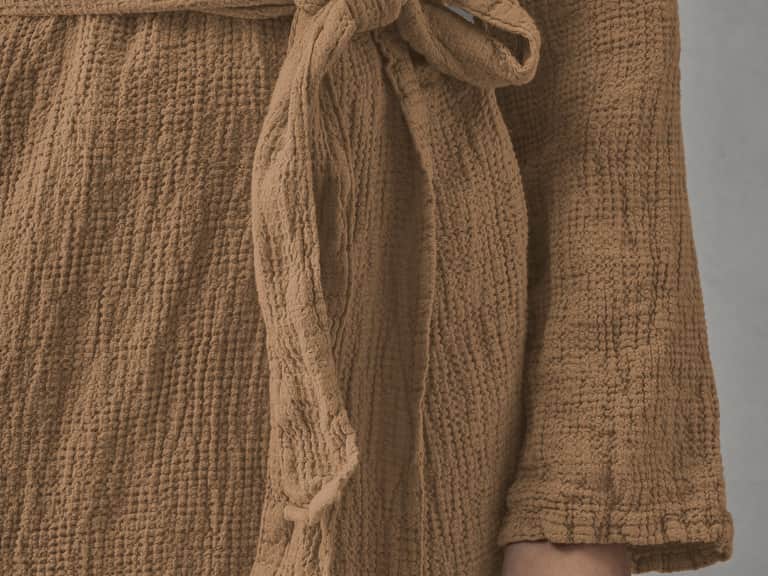
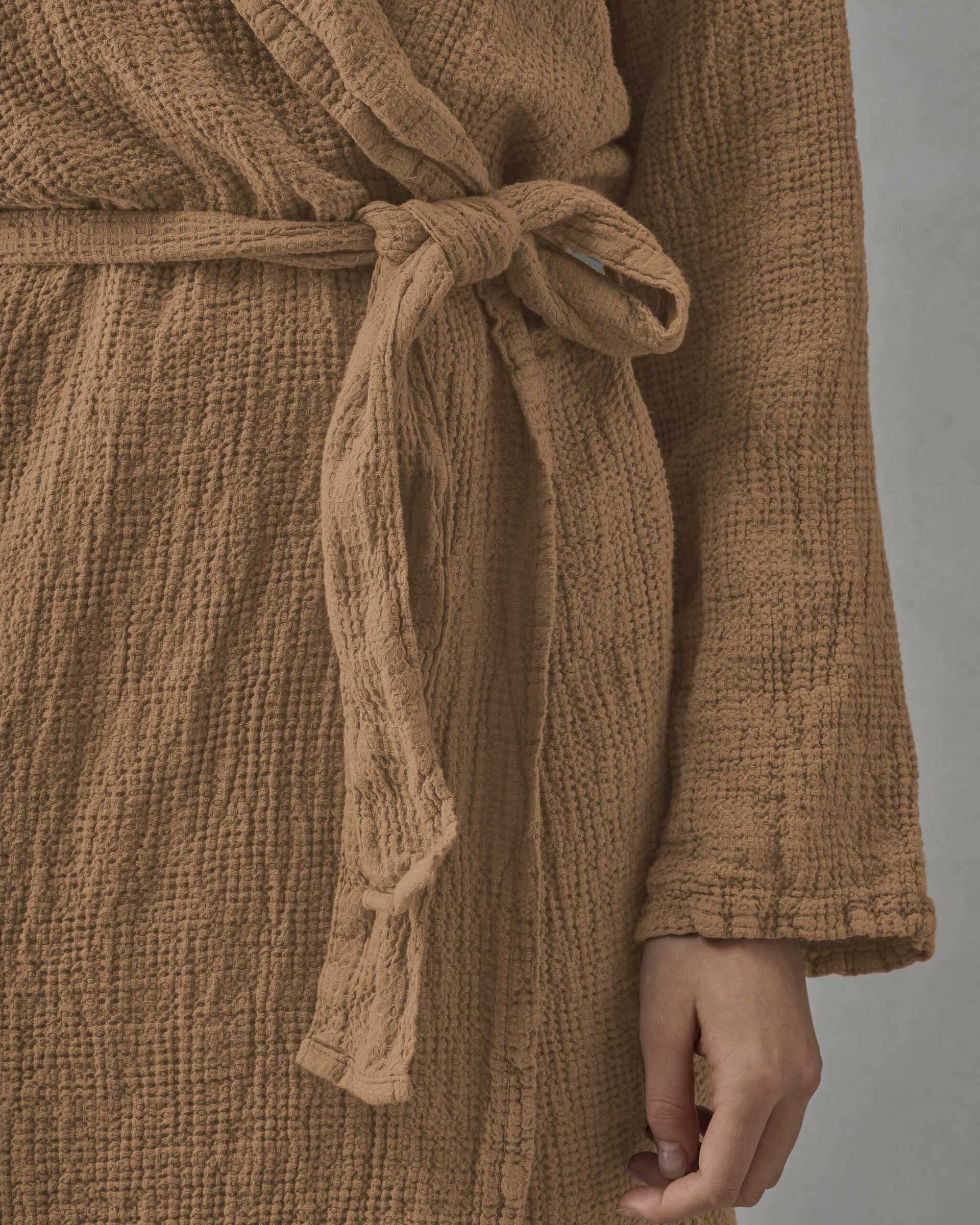
Waffle fabric takes its name from a familiar grid-like surface. Its raised sections meet recessed pockets, creating a relief that can feel pleasantly substantial without requiring a heavy, solid sheet of cloth. The texture also means that the fabric does not lie entirely flat against the body. In a robe, that quality can contribute to a sense of airiness and help the garment feel less dense than a plush, thick pile.
The structure’s relationship with moisture is one reason waffle cloth is commonly used for bath textiles. Its surface offers more texture than a smooth plain weave, and the fabric can take up water while remaining comparatively light, depending on the fiber and weight. The open character of a particular waffle cloth may also support airflow as it dries. These are tendencies, not guarantees: absorbency and drying time depend on the yarn, density, finishing, how wet the garment becomes, and the conditions in which it is hung.
That last point is especially important. A lightweight robe used after a quick rinse may dry more readily than a heavier garment worn over damp skin for an extended period. Humid bathrooms, crowded hooks, and limited ventilation can slow any textile’s drying. A fabric’s structure can help, but it cannot override the room around it.
Waffle texture has a quietly architectural quality, too. The dimensional surface gives a robe visual interest without relying on a print or elaborate trim. A shawl collar, generous sleeves, and a relaxed shape can keep the garment classic, while the fabric itself supplies the detail. The result feels considered rather than ornate: an everyday essential with a tactile point of view.
Crepe-effect fabric: softness, movement, and a less uniform surface
Crepe-effect cloth offers another kind of texture. Instead of the regular, pocketed geometry of waffle, its surface is typically grainy, rippled, or softly puckered. Depending on how it is made, that texture may come from specially twisted yarns, the fabric structure, or a finishing process. The result is a surface that catches light unevenly and can lend a robe an easy, fluid drape.
In a bath robe, that character can make the garment feel less like a towel and more like relaxed clothing. Crepe-effect linen may skim rather than cling, with a natural irregularity that feels intentionally unstudied. The texture also tends to soften the visual impression of creasing; linen is not a fabric that promises a perfectly smooth, pressed appearance, and its lived-in character is often part of the appeal.
Crepe-effect fabric should not be assumed to absorb more—or less—than waffle simply because of its name. Absorbency is influenced by the fiber and the fabric’s construction, as well as any finish applied to the cloth. A robe described as highly absorbent may still feel different from a towel-like terry garment, and a textured surface alone is not a reliable measure of how quickly it will take up water.
Consider the way you plan to wear it. If you like a robe for lingering over breakfast, getting ready, or moving between rooms, a soft drape and lightly textured hand may be high on your list. If you want to put it on directly after bathing and rely on it to help manage moisture, compare its stated purpose and fabric weight with your expectations rather than relying on the word “crepe.”
Absorbency is a meeting of fiber and structure
Fabric absorbency is often reduced to a simple question: does this robe soak up water? In practice, it involves several variables. Fiber type affects how moisture interacts with the material. Yarn thickness and density determine how much fabric is present in a given area. The weave or surface construction changes the way that material meets the skin and the surrounding air. Finishes, laundering, and the garment’s condition also play a part.
Linen is made from flax fibers and is valued for its distinctive hand and practical durability. In a robe, linen may feel crisp or relaxed depending on its finishing and weight. A waffle structure can give linen additional relief and a tactile surface; a crepe effect can make it feel softer and more fluid. Neither feature turns linen into terry cloth, whose looped pile is designed to create a thick, towel-like surface. This is a useful distinction for anyone expecting a robe to perform exactly like the bath towel hanging nearby.
For many people, comfort after a shower means a balance: enough absorbency to feel useful, enough breathability to avoid a heavy, clammy sensation, and a fabric that is pleasant against the skin. A lighter robe may be comfortable in a warm room or during summer, while a heavier option can feel more enveloping in a cool bathroom. Personal preference is as relevant as any technical description.
Skin sensitivity is another consideration. Fabric hand, seams, collar construction, and garment fit can all affect how a robe feels. Product descriptions may use terms such as hypoallergenic, but individual sensitivities differ. Anyone with a known allergy or a persistent skin concern should check fiber and care information carefully and follow professional advice where needed.
Weight, warmth, and the question of drying time
Fabric weight is usually expressed in grams per square metre, or g/m², and can help compare textiles when the information is available. It is not a direct comfort score. A heavier robe may feel warmer and more substantial, but it may also take longer to dry if it retains more water. A lighter robe can feel more breathable and easier to handle, though it may offer less insulation. Construction and cut complicate the picture further: a roomy robe has more fabric to dry than a short, close-fitting one.
The Lipe New Robe is a useful example of how these details work together. It is made from 100% linen in a waffle construction, with a practical shawl collar, and is described as lightweight, absorbent, and quick-drying. Its listed fabric weight is 230 g/m². Those details suggest a robe intended to combine a textured, airy surface with everyday utility. Explore the Lipe New Robe if you would like to see how waffle linen is applied in a finished garment.
Drying time is not solely a property of the cloth. A robe hung open on a well-spaced hook in a ventilated room will generally dry more effectively than one bunched behind a door. After use, shake it out and spread the sleeves and belt so air can circulate. If the bathroom is humid, moving the robe to a drier room may make a meaningful difference. These small habits can help preserve freshness and reduce the temptation to wash a garment more often than necessary.
For households with limited drying space, the robe’s size, weight, and care label deserve as much attention as its texture. A generous, thick garment may be luxurious to wear but awkward to dry in a compact bathroom. The best textile choice is one that fits both the moment of use and the practical rhythms of the home.
Choosing by routine, not just by name
Rather than asking which construction is objectively superior, begin with the way you will use the robe. Do you put it on while your skin is still damp, or once you have towel-dried? Is it mainly for warmth, for modesty, or for a slow transition from bathing to dressing? Does your home stay cool, or is the bathroom warm and humid? The answers help clarify whether lightness, absorbency, warmth, or drape should lead the decision.
- For a light, textured layer: Look for a waffle robe with a weight and fit that suit your climate and routine.
- For a softly relaxed silhouette: Consider crepe-effect fabric if you enjoy a gently puckered surface and fluid drape.
- For a very towel-like feel: Check whether the robe uses terry or another pile construction rather than assuming all textured fabrics perform the same way.
- For a small bathroom: Give drying space and care instructions serious consideration alongside softness and appearance.
- For sensitive skin: Check the fiber content, seams, finishes, and washing guidance, and assess personal comfort rather than relying on a general label alone.
Fit is part of the sensory experience. A robe with a broad shawl collar can feel comforting around the neck, while a lighter collar and narrower sleeves may feel less bulky. Belt placement and sleeve length influence how secure and practical the garment feels. These design details do not change the textile’s underlying absorbency, but they shape the way it performs in daily life.
Care that preserves texture and performance
Always begin with the garment’s care label. Linen robes may be machine washable, but the suitable temperature, detergent, and drying method vary by product and finishing. A gentle approach is usually a sensible starting point: avoid overloading the machine, use an appropriate amount of mild detergent, and allow the garment room to move. Residue from excessive detergent can make fabric feel less fresh, while rough treatment may place unnecessary stress on seams and fibers.
Waffle fabric benefits from being shaken out after washing so its surface is not left compressed in a dense bundle. Crepe-effect fabric may be intended to retain its relaxed texture, so pressing it flat could alter the look the finish is designed to create. If the care label permits tumble drying, follow its recommended temperature and remove the robe promptly rather than leaving it exposed to prolonged high heat. Line drying can be gentler and may be a useful option where space and weather allow.
Do not assume that fabric softener is necessary. Some textile makers advise against it because coatings can change the feel or performance of certain fabrics. Similarly, bleach and harsh whitening products may damage fibers or affect color. When in doubt, follow the manufacturer’s guidance instead of applying general advice meant for a different textile.
Between washes, let the robe air thoroughly. A robe that dries completely between uses is more comfortable to put on and less likely to hold an unwelcome stale scent. If it needs refreshing, ventilation may be enough; washing frequency should reflect actual use, care instructions, and household needs.
A more considered everyday ritual
Waffle and crepe offer two distinct interpretations of comfort. Waffle draws the eye with a regular, dimensional grid and can make a robe feel airy while supporting practical moisture management. Crepe-effect linen brings a softer, more irregular surface and often a sense of movement and relaxed drape. The distinction is tactile as much as technical: one feels structured and quietly crisp; the other can feel fluid and softly textured.
Yet a weave name is only the beginning of the story. Fiber content, weight, finishing, garment construction, and care all influence how a robe behaves. A beautiful textile is most successful when it meets the reality of your routine—when it feels comfortable against the skin, dries in the space you have, and continues to look appealing after regular care.
Choose with both hand and habit in mind. Read the specifications, consider how damp you will be when you put the robe on, and picture where it will hang once the morning ritual is over. The right robe does not merely look inviting on a hook. It makes the transition from water to day feel a little more considered, and a little more your own.
Frequently asked questions
Is a waffle robe more absorbent than a crepe robe?
Not necessarily. Waffle construction is often valued for its textured surface and practical moisture handling, but absorbency depends on fiber, weight, density, and finishing. “Crepe” can describe more than one kind of fabric construction, so compare the specific robe’s composition and product details.
Does a lighter robe always dry faster?
Not always, but a lighter garment may contain less fabric and can be easier to handle. Drying also depends on how much water it retains, the room’s humidity, airflow, and whether the robe is hung open rather than bunched up.
Will linen feel rough in a bath robe?
Linen’s hand varies with yarn, weave, weight, and finishing. Some linen feels crisp at first, while washed or otherwise softened fabric may feel more relaxed. The most reliable guide is the garment’s stated finish and, when possible, a hands-on assessment.
Should I iron a crepe-effect robe?
Check the care instructions. Crepe-effect fabric is often valued for its textured, relaxed appearance, and ironing may flatten that surface. If pressing is permitted, use the temperature recommended on the care label and test a discreet area when appropriate.